WHO MAKES THE #MPPMAGIC
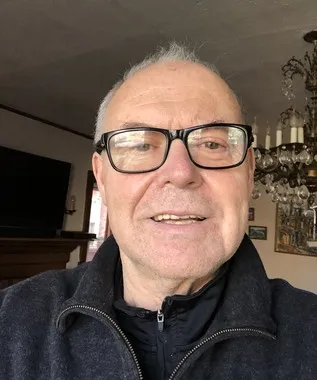
How did you become a piano technician?
It was a logical transition from hobby interests to vocational interests. As a young man in high school, I was obsessed with all things mechanical, specifically Volkswagen "Beetles" and electric guitars; both of which I liked to modify and customize. When a piano shop moved next door to me during my second year of college, I immediately got a part-time job as an apprentice and learned to work on old upright pianos. This was in the early '70s in Baltimore, MD.
What does it take to become good at what you do?
During my years at Steinway, first as an apprentice, and later as a piano tuner, I was RELENTLESS AND UNSTOPPABLE!!! At Steinway, the "Old Timers" had a saying: “There's the right way, the wrong way, and the STEIN-WAY.” I took this very much to heart. I knew that in order to become the best tuner, I would have to adhere 100% to the Steinway technique of "aural" tuning that relies strictly on the style and traditional method of old school piano tuning as it had been done by ear for over a century.
How long have you worked in the business? What did you do before joining Columbia?
I've worked as a piano tuner since 1975 when I started my apprenticeship with a Piano Shop in Catonsville, Maryland called “The Piano Man”. Later in 1977, I joined Steinway Factory as an apprentice and have worked continuously as a piano technician for the last 43 years. Before joining Columbia, I worked for Klavierhaus as their concert piano tuner for 16 years. During that time, I tuned for many clients including NYU, Herbie Hancock, NPR, Lincoln Center, etc.
Describe the process of bringing a piano to perfection.
I don't want to sound simplistic, but it's obviously a process of constant and painstaking refinement. "It takes 10% of the time to do 90% of the work." It's the last 10% of the work that takes 90% of the time! That's what constitutes true concert level work!
What do you like most/least about your job?
I enjoy the independence and being self-directed. What I don't like is that I get a little bit too emotionally involved with my work, especially when I perceive that a particular piano has been abused or disrespected.
What are your hobbies?
If you ask Stella, my wife, what my #1 pastime is, she would say: yelling obscenities at Trump (in Spanish), but other than that, I enjoy motorcycle camping. I belong to a motorcycle camping club and we meet several times a year for campouts. We are mostly technicians and engineers. We have a good old time!
What can we do to help keep Columbia pianos in good shape?
I think it would help to begin by thinking about pianos as fragile musical instruments built of small pieces of diverse materials such as many types of woods, leathers, metal, etc.
Let's not treat pianos as furniture. They're not tables or desks. DO NOT PUT WATER BOTTLES OR FLASKS ON TOP OF THEM!
I realize that there are many composers that call for prepared piano or inside piano pieces, but be aware that if these aren't done carefully they can potentially be harmful and permanently damage the instrument!
Anything you would like to share with the Columbia Community?
Yes. I actually appreciate getting those emails from students and faculties letting me know where attention is needed. It shows me that they care about the condition of Columbia's pianos. We are truly blessed to be part of such a fine institution and I consider myself lucky to be working in an excellent environment provided by my boss at MPP Magdalena and her support staff Beth and Jane. Together we all work excellently, striving to provide the highest level of service possible.
I realize that sometimes it seems that I'm chasing my own tail, especially when it comes to situation like the Schapiro practice rooms pianos which are always in a state of flux due to their heavy usage and the high number of broken and new/stretching string that are always out of tune. Most pianists don't know that it takes about 10 tunings before a piano string will finally stabilize and hold a tuning. Chances are, that in any one piano, there will always be a few out of tune notes because of strings that are new and stretching. If this bothers you enough, send MPP an email requesting an emergency tuning and I guarantee that I will oblige within a couple of days at most!
Same goes for professors’ and faculty's pianos. I'm always happy to tune ASAP. Please keep in mind that best times to arrange office tunings are Tuesdays and Fridays at 8 A.M., so if you can plan for any of those mornings it should work out fine!